
So, you’re wondering about training your dog with an e-collar, specifically how long it actually takes. It’s a common question, and honestly, there’s no single answer that fits every dog. Think of it like teaching a kid to ride a bike; some pick it up in an afternoon, while others need a bit more time and practice. Several things play a part in how quickly your dog gets the hang of things. We’re going to break down what influences the timeline so you can have a clearer picture of what to expect when you start working with your furry friend.
Key Takeaways
- The time it takes to train a dog with an e-collar varies a lot based on the dog, the owner, and the goals.
- Younger dogs and certain breeds might learn faster, but consistency from the owner is the biggest factor.
- Training usually involves introducing the collar, teaching basic commands, and then practicing those commands in different places.
- Owner skill, the dog’s past experiences, and how complicated the desired behaviors are all affect the training duration.
- For complex issues or to speed things up, getting help from a professional trainer like Anvil K9 in the Chattanooga area can be a good idea.
Understanding E-Collar Training Timelines
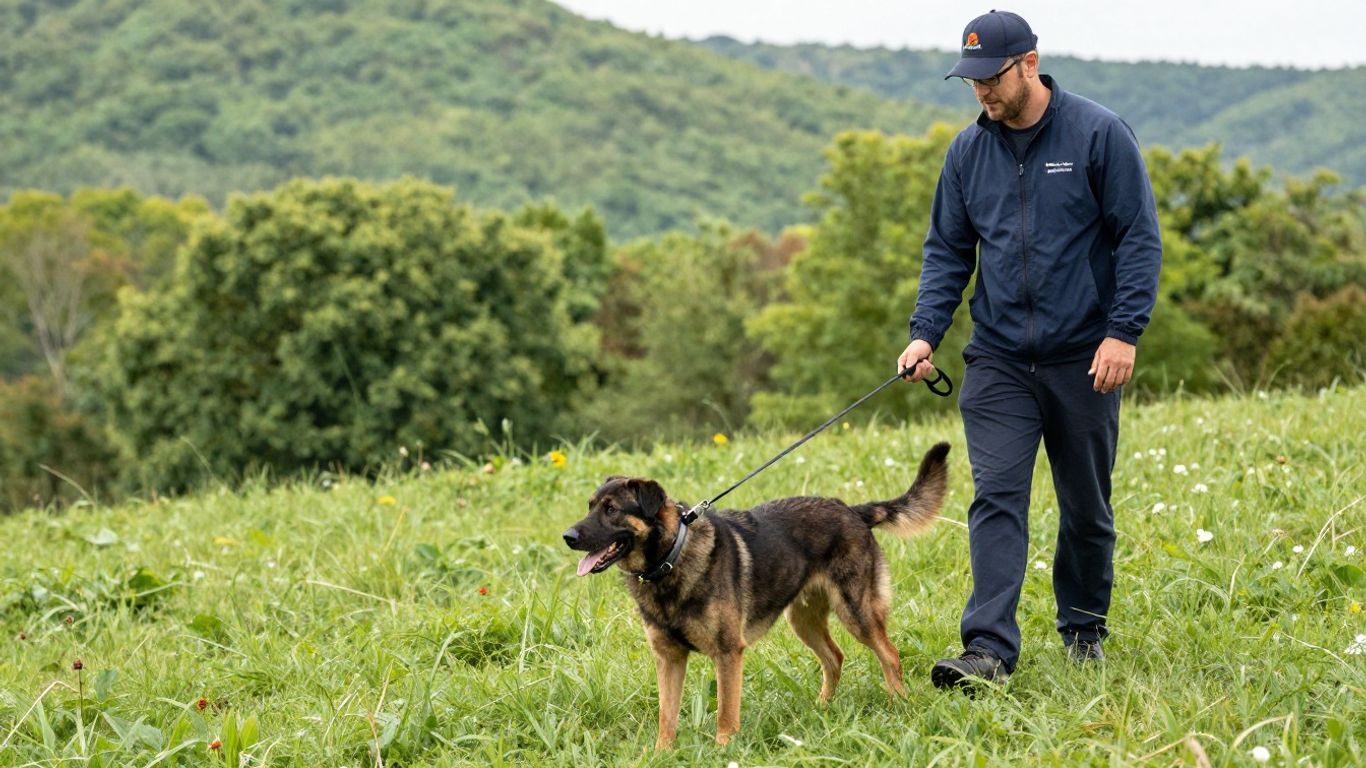
When people ask how long it takes to train a dog with an e-collar, they’re usually looking for a simple number. The truth is, there’s no single answer that fits every dog and every owner. It’s more about understanding the process and what goes into it. At Anvil K9, we’ve seen a wide range of timelines, and it really comes down to a few key things.
Factors Influencing Training Duration
Several elements play a big role in how quickly a dog learns and how long training takes. It’s not just about the tool itself, but the whole picture. Think of it like learning a new skill yourself – some people pick it up faster than others, and the complexity of the skill matters too.
- Dog’s Age and Breed: Puppies learn differently than adult dogs. Certain breeds also have natural inclinations that can affect training speed. A young puppy might be more easily influenced, but also more easily distracted. An older dog might have ingrained habits that take longer to change.
- Owner’s Training Skill and Commitment: Your ability to be consistent and apply the training correctly makes a huge difference. If you’re new to training or struggle with consistency, it will likely take longer.
- Dog’s Temperament and Previous Experiences: A confident, eager-to-please dog might progress faster than a fearful or stubborn one. If a dog has had negative experiences with training or tools, that can also add time.
- Complexity of Desired Behaviors: Teaching a simple ‘sit’ is different from teaching a reliable off-leash recall in a busy park. More complex behaviors require more time and practice.
The Role of Dog’s Age and Breed
Puppies, generally starting our 6 Week Puppy Program at 12 weeks old, are in a prime learning phase. They are often more adaptable and less set in their ways. However, they also have shorter attention spans and require more patience. Adult dogs, typically entering our 3 Week Program at 16 weeks or older, might have existing habits, good or bad, that need to be addressed. Some breeds are naturally more independent, while others are eager to work. For instance, a herding breed might pick up on commands quickly but could also be prone to overthinking or becoming anxious if the communication isn’t clear. Understanding your dog’s breed characteristics can help set realistic expectations.
Consistency is Key for E-Collar Success
No matter the program, consistency is the bedrock of successful e-collar training. This means applying commands and corrections (or the release of pressure) the same way, every time. If you’re inconsistent, your dog will get confused. They won’t know what’s expected of them, and that confusion can slow down progress significantly. It’s about clear communication. When you use the e-collar correctly, it’s a tool for clear communication, not punishment. This clarity helps build a strong foundation for reliable behavior. For owners looking for the right gear, selecting the correct dog collar is an important first step in this consistent approach.
Training timelines aren’t fixed. They depend on the dog, the owner, and the goals. What matters most is clear communication and consistent application of the training methods. At Anvil K9, we focus on building that understanding so your dog can succeed in real-world situations.
Core E-Collar Training Phases
When we talk about e-collar training, it’s not just about slapping a collar on and pushing buttons. It’s a structured process. At Anvil K9, we break it down into distinct phases to make sure your dog truly understands what’s expected. This approach helps build a solid foundation and then expands on it, making sure the training sticks in the real world.
Introducing the E-Collar Appropriately
This is where it all begins. The goal here is to make the e-collar a neutral tool, not something scary. We want the dog to associate it with learning and clear communication, not punishment. It starts with getting the dog used to wearing the collar, then introducing a low-level stimulation that’s just enough to get their attention. Think of it like a gentle tap on the shoulder. We pair this with a command they already know, like ‘sit.’ When they sit, the stimulation stops, and they get a reward. This teaches them that the sensation means ‘do the thing I was just asked to do.’
- Collar Acclimation: Letting the dog wear the collar for short periods without any stimulation.
- Low-Level Introduction: Finding the dog’s specific working level for the e-collar, which is just enough to get their attention without causing distress.
- Association Building: Pairing the low-level stimulation with known commands and rewarding correct responses.
Building Foundational Obedience
Once the dog understands the e-collar’s role, we move on to building solid obedience. This phase focuses on teaching new commands and strengthening existing ones. We use the e-collar to mark correct behavior and provide gentle guidance when needed. It’s about making sure the dog understands commands like ‘sit,’ ‘stay,’ ‘come,’ and ‘down’ reliably. This is where consistency really pays off. The more consistent you are, the faster your dog learns.
We have two main programs designed for this: the 3 Week Board and Train for dogs 16 weeks and older, and the 6 Week Puppy program for younger pups. Both are built around these core training principles.
Proofing Commands Under Distraction
This is arguably the most important phase for real-world reliability. Teaching a dog a command in a quiet living room is one thing; getting them to obey when there’s a squirrel running by or another dog barking is another. Proofing involves practicing commands in increasingly distracting environments. We gradually introduce distractions – other dogs, people, noises – while still using the e-collar to help the dog focus and make the correct choice. The aim is to build a dog that listens not just when it’s easy, but when it matters most.
This phase is about making sure the training isn’t just for the training session itself. It’s about creating a dog that understands and respects commands in all sorts of situations, not just the quiet ones at home. It takes time and patience to get there, but the result is a well-behaved companion you can trust anywhere.
Typical E-Collar Training Durations
When people ask how long e-collar training takes, they’re usually looking for a number. But honestly, it’s not that simple. It really depends on what you’re trying to achieve and what your dog already knows. We’ve got two main programs at Anvil K9 that cover most needs.
Short-Term Intensive Training
For dogs that need a solid foundation or have some existing behavioral issues, our 3 Week Program is often the go-to. This is for dogs 16 weeks (4 months) and older. It’s designed to pack a lot of learning into a short period. We focus on building reliable obedience and addressing things like leash reactivity or jumping. It’s intensive, meaning the dog lives with us, so we can work on them consistently every day. This program is great for getting a dog to a point where they understand commands clearly, even with distractions. It’s not about making them perfect overnight, but about giving them the tools to succeed and you the skills to maintain it.
Longer-Term Behavioral Modification
Sometimes, training isn’t just about basic commands. If you’re dealing with more complex issues or want a very high level of off-leash reliability, longer periods might be needed. Our 6 Week Puppy Program, for puppies 12 weeks (3 months) old, is structured for foundational learning over a longer stretch. While it’s for puppies, the principles of consistent, long-term training apply to any dog needing more time to process and generalize behaviors. This extended duration allows for deeper work on impulse control, confidence building, and solidifying commands in a wide variety of environments. It’s about building a well-rounded canine companion, not just a dog that listens in the living room.
Achieving Off-Leash Reliability
Getting a dog to reliably respond off-leash, especially in busy places, takes time and practice. It’s not something that happens in a week or two. Both our programs work towards this goal, but the level of reliability achieved varies. The 3 Week Program can get a dog to a good level of off-leash control for many situations. However, true, bomb-proof off-leash reliability, where you can trust your dog in any scenario, often requires ongoing training and practice even after the formal program is complete. It’s a journey, and the e-collar is a tool to help communicate clearly during that process. We focus on building a strong recall, which is a key part of coming when called.
Remember, the duration of training is less about a clock and more about the dog’s learning process and the owner’s commitment to continuing the work at home. Anvil K9 provides lifetime support to help you maintain progress.
At Anvil K9, we offer these structured programs to give your dog the best chance at success. We also have financing options available to make investing in your dog’s training more manageable. Our veteran-owned business is dedicated to providing clear, honest training for real-world results.
What Affects How Long It Takes
So, you’re wondering how long e-collar training will take. It’s a fair question, but there isn’t a single answer that fits every dog. Think of it like teaching a kid a new skill; some pick it up fast, others need more time. Several things play a role in how quickly your dog progresses.
Owner’s Training Skill and Commitment
This is a big one. How much time and effort are you willing to put in? If you’re consistent and follow through, you’ll see faster results. If training sessions are sporadic or you’re not fully committed, it’s going to take longer. Your ability to understand your dog and apply the training techniques correctly matters a lot. At Anvil K9, we have a 3 Week Board and Train program for adult dogs and a 6 Week Puppy Program designed to build a solid foundation, but your continued practice after the program is key.
Dog’s Temperament and Previous Experiences
Every dog is an individual. A confident, eager-to-please dog might learn faster than a shy or anxious one. If your dog has had negative experiences with training or correction in the past, it might take a bit more time to build trust and show them that this training is different. We focus on clear communication and fair application of the NePoPo method to help dogs understand what’s expected.
Complexity of Desired Behaviors
Teaching your dog to sit is different from teaching them to ignore distractions while off-leash. Basic commands usually come quicker. More complex behaviors, like reliable recall in a busy park or stopping reactivity, require more time and practice. It’s about building a strong understanding and then proofing it in different situations. Our 6 Week Puppy Program and 3 Week Program are structured to build these skills progressively.
Remember, training isn’t just about the time spent with the collar; it’s about the consistent communication and relationship you build with your dog every single day. Patience and understanding are your best tools.
Realistic Expectations for E-Collar Training
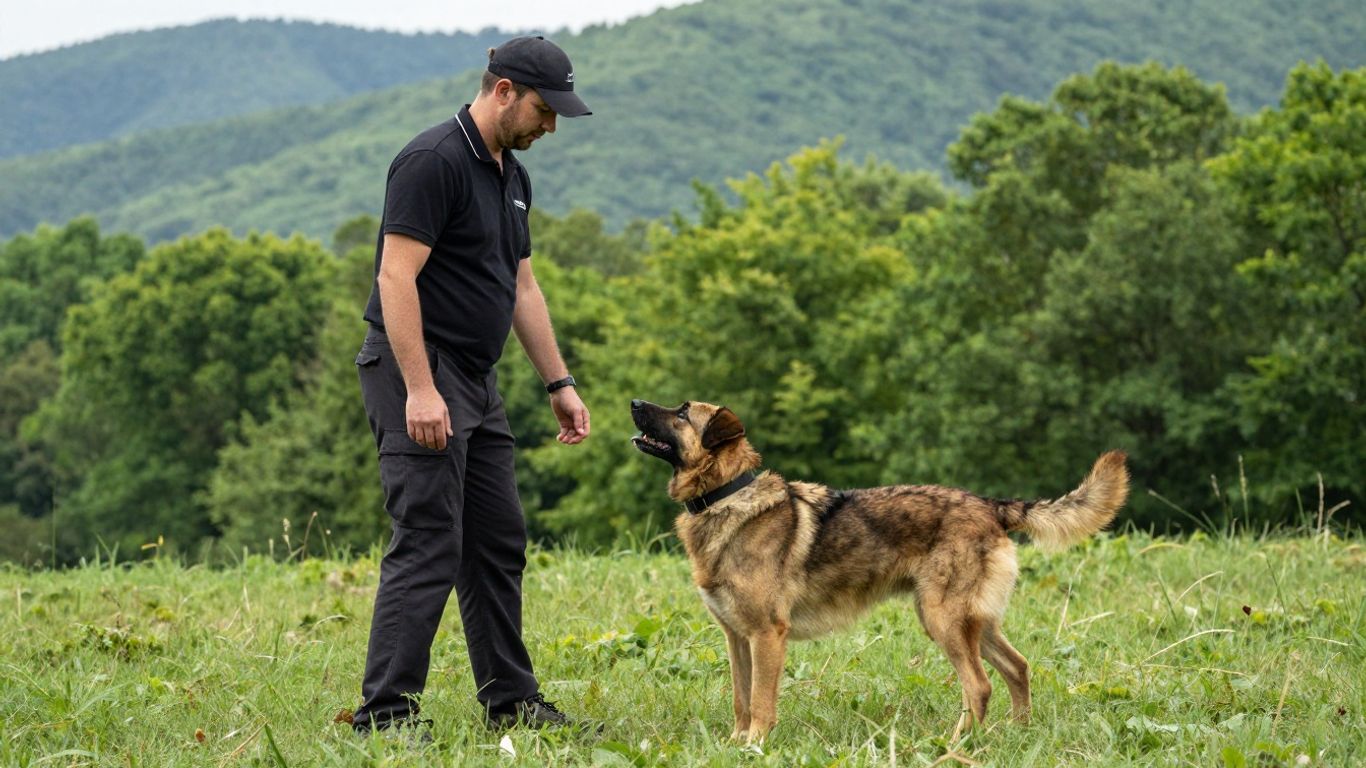
Look, training a dog, especially with an e-collar, isn’t a magic wand. It takes time, effort, and a clear head. You’re not going to have a perfectly behaved dog overnight, and that’s okay. It’s about building a relationship and clear communication, not just getting a few tricks down.
Beyond Basic Commands
Getting your dog to sit or stay when no one else is around is one thing. Getting them to do it when a squirrel is running by, or another dog is barking, that’s a whole different ballgame. E-collar training helps bridge that gap, but it requires consistent work. We’re talking about building reliability in real life, not just in your living room. This means practicing in different places, with different distractions, over and over. It’s about making sure your dog listens to you no matter what’s going on around them. This is where the NePoPo method really shines, giving dogs clear information so they understand what’s expected, even when things get exciting.
Addressing Specific Behavioral Issues
If you’re dealing with something more complex, like reactivity on leash or a dog that bolts out the door, expect it to take longer. These aren’t just simple obedience issues; they’re often rooted in deeper habits or anxieties. Anvil K9’s 3 Week Program is designed to tackle these kinds of problems head-on, but it’s not a quick fix. It’s about changing ingrained behaviors. You’ll see significant progress, but you’ll need to continue the work at home to maintain those changes. Think of it as a strong start, not the finish line.
Maintaining Training Progress
Training doesn’t stop when the program does. Whether you go with our 6 Week Puppy Program or the 3 Week Program for adult dogs, the skills need to be practiced. Dogs can regress, especially if they aren’t regularly reminded of the rules. Life happens, distractions change, and your dog might test boundaries. Consistent, fair application of what your dog has learned is the only way to keep their good behavior solid. It’s an ongoing process, like anything worthwhile.
Training is a journey, not a destination. The e-collar is a tool to help you communicate more effectively, but it’s your commitment to practice and consistency that truly shapes your dog’s behavior long term. Don’t expect perfection immediately, but trust the process and the results you’ll see with dedicated effort.
When to Seek Professional E-Collar Guidance
Look, sometimes you hit a wall. You’ve been working with your dog, trying to get things right, but it’s just not clicking. Maybe your dog is showing some serious behavioral issues, or perhaps you just want to speed things up and get the best possible results. That’s where professional help comes in. Trying to figure out complex training on your own can lead to frustration for both you and your dog. It’s okay to admit you need a hand.
Complex Behavioral Challenges
If your dog is dealing with things like severe anxiety, aggression, or extreme reactivity, trying to tackle that alone with an e-collar can be risky. These issues require a deep understanding of dog behavior and precise application of training tools. Anvil K9 has specific programs designed to address these tough problems. We’ve seen dogs with all sorts of issues, and our approach is built to handle them.
- Aggression towards people or other dogs
- Intense fear or anxiety that causes destructive behavior
- Persistent reactivity, like lunging or barking uncontrollably on leash
Accelerating the Learning Process
Maybe your dog isn’t struggling with major issues, but you’re just not seeing the progress you hoped for, or you want to get there faster. Professional trainers have a refined eye for what’s working and what’s not. They can spot subtle things you might miss and adjust the training plan on the fly. This is where our structured programs shine. We have a 3 Week Board and Train for adult dogs (16+ weeks) and a 6 Week Puppy Program for younger pups (12+ weeks). These programs are designed to build solid obedience and reliability efficiently.
Ensuring Proper E-Collar Use
Using an e-collar correctly is vital. It’s not about punishment; it’s about clear communication. Misusing the tool can create more problems than it solves. A professional trainer can show you exactly how to use the e-collar at the right levels and in the right situations. This ensures your dog understands what you’re asking without unnecessary stress. Getting this right from the start makes all the difference. If you’re unsure about the tool or the method, it’s always best to get guidance. We can help you understand the nuances of balanced training and how tools like the e-collar fit into creating a well-behaved companion. Remember, investing in professional training means you’re not just getting a trained dog, you’re also learning how to maintain that training for life. We also offer flexible financing options through Affirm, making professional training more accessible.
If you’re finding it tough to get your dog to behave, especially with an e-collar, don’t worry! Sometimes, a little expert help makes all the difference. Our trainers know how to use these tools the right way to help your dog learn. Ready to see a change? Visit our website to learn more and book a session!
So, How Long Does E-Collar Training Really Take?
Look, there’s no magic number when it comes to training a dog with an e-collar, or any tool for that matter. It really depends on your dog, what you’re trying to teach them, and how consistent you are. Some dogs pick things up faster than others. For basic stuff, you might see progress in a few weeks. For more complex issues or off-leash reliability, it’s going to take longer. At Anvil K9 Dog Training here in the Chattanooga area, we offer a 3 Week Program for adult dogs and a 6 Week Puppy Program designed to build a solid foundation. These programs give dogs the structure and clear communication they need. Remember, training isn’t a one-and-done deal; it’s an ongoing process. If you’re looking for reliable results and want to understand the ‘why’ behind the training, consider professional help. We offer financing through Affirm to make it easier to invest in your dog’s future. You can learn more about our board and train programs at anvilk9.com/board-and-train-chattanooga or reach out through anvilk9.com/contact. We’re a veteran-owned business, and we’re here to help.
Frequently Asked Questions
How quickly can I expect my dog to learn with an e-collar?
It really depends on your dog and what you’re trying to teach. Some basic commands might click in a few weeks, especially with consistent practice. For more complex stuff or fixing tricky behaviors, it can take longer, sometimes a couple of months. Think of it like learning a new skill yourself – some things are easier and faster to pick up than others!
Does my dog’s age matter when using an e-collar?
Yes, age plays a big role! Puppies, like those in Anvil K9’s 6 Week Puppy Program starting at 12 weeks old, learn differently than adult dogs. Younger pups are like sponges for basic manners and socialization. Older dogs, or those in Anvil K9’s 3 Week Program for dogs 16 weeks and older, might have established habits that take a bit more time to adjust. But don’t worry, both young and old dogs can learn a lot!
What if my dog has had training before, or has some behavioral issues?
Previous experiences can definitely influence training. If your dog has learned some things already, we build on that. If they’ve picked up not-so-great habits or have specific issues like jumping or pulling, it might take a bit longer to reshape those behaviors. Anvil K9’s programs are designed to handle these challenges, focusing on clear communication to help your dog understand what’s expected.
How much does training with an e-collar cost?
The investment in training varies depending on the program. Anvil K9 offers specialized programs like the 6 Week Puppy Program and the 3 Week Program for adult dogs. To make professional training more accessible, Anvil K9 provides financing options through Affirm. This allows you to spread the cost into manageable monthly payments, so you can get started without paying everything upfront. You can check out details at anvilk9.com/board-and-train-chattanooga.
Is e-collar training the same as punishment?
Not at all! While e-collar training, especially using methods like NePoPo, involves clear communication and sometimes a mild sensation to guide behavior, it’s not about punishment. It’s about teaching your dog what you want them to do and what to avoid. Think of it as a very clear way to say ‘yes, that’s right!’ or ‘no, not that way.’ The goal is a confident, well-behaved dog, and Anvil K9 focuses on fair and consistent methods to achieve that.
What if I’m not sure if e-collar training is right for my dog?
It’s totally understandable to have questions! Anvil K9 Dog Training, a veteran-owned business in the Chattanooga area, offers expert guidance. They specialize in balanced training methods like NePoPo, which are proven to create reliable obedience. If you’re facing tough behavioral challenges or just want to ensure you’re using the tools correctly, reaching out to a professional is a great idea. You can contact them at 423-290-7584 or visit anvilk9.com/contact to learn more about how they can help.