
Walking your dog should be a pleasant experience, not a tug-of-war. If your furry friend treats every stroll like a race, you’re likely wondering how to stop a dog from pulling on leash. It’s a common problem, but one that can be solved with the right approach. We’ll break down why it happens and give you practical steps to make walks enjoyable again for both of you.
Key Takeaways
- Understand that pulling often stems from a dog’s natural instincts or environmental triggers, not defiance.
- Proper gear, like the right harness and leash, can make a big difference in managing pulling.
- Clear communication and consistent training are vital for teaching your dog to walk politely.
- Managing distractions and rewarding good behavior helps solidify loose-leash walking skills.
- If pulling persists, professional help from experienced trainers can provide tailored solutions.
Understanding Why Dogs Pull on Leash
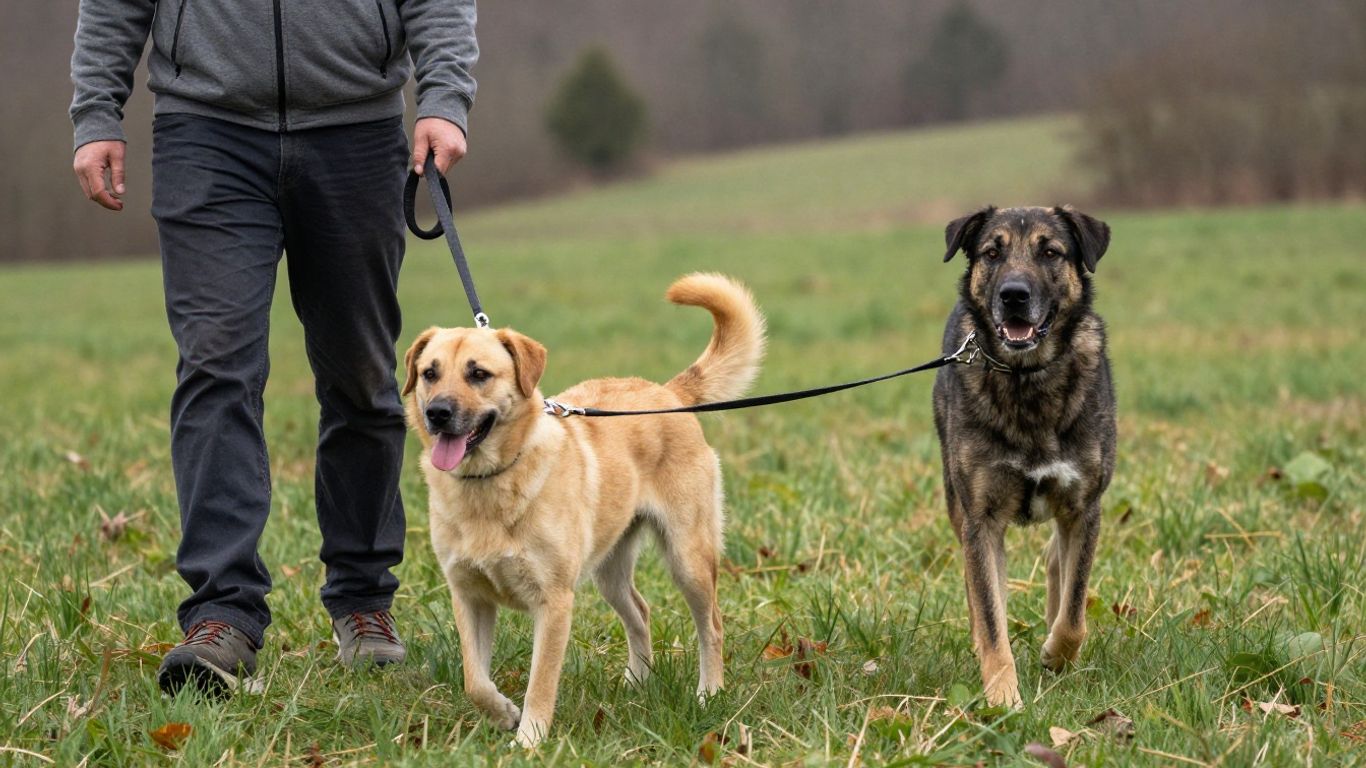
It’s a common sight: a dog straining ahead, leash taut, while their owner struggles to keep pace. This pulling behavior isn’t usually about defiance; it’s often rooted in a dog’s natural instincts and how they perceive the world. Understanding these reasons is the first step toward correcting it.
Instinctive Behaviors That Lead to Pulling
Dogs are naturally curious and driven by their noses. When they catch an interesting scent or see something that excites them, their instinct is to investigate immediately. This forward momentum can easily translate into pulling on the leash. Think about it: if you smelled a bakery from a block away, wouldn’t you want to walk faster towards it? Dogs experience similar urges, amplified by their keen senses. This forward drive is a powerful motivator. Their desire to explore, chase, or simply get to a destination faster than you are moving is a primary reason for leash pulling. It’s not malicious; it’s just how they’re wired.
Environmental Triggers for Pulling
Walks are full of stimuli that can set a dog off. Other dogs, squirrels, interesting smells, people, or even the sound of a car can trigger a dog’s excitement or prey drive. These external factors can cause a dog to lunge forward, creating slack in the leash that they then pull against. The environment itself provides constant opportunities for a dog to be pulled forward. If your dog is particularly sensitive to sights and sounds, walks can become a constant battle against these triggers. This is why managing distractions is so important, and why training needs to happen in various settings.
Communication Breakdown Between Dog and Owner
Sometimes, the pulling is a result of unclear communication. If a dog doesn’t understand what is expected of them on a leash, they might default to pulling because it gets them where they want to go. A loose leash is a signal of calm, controlled movement, but if the dog doesn’t understand this concept, they’ll continue with what works. If the owner consistently allows pulling or inadvertently rewards it by continuing to walk forward, the dog learns that pulling is an effective way to move. This can happen even with well-intentioned owners who haven’t established clear rules. It’s a cycle that needs to be broken with consistent training. If you’re finding this a persistent issue, consider programs like the 3 Week Program at Anvil K9, designed to address these communication gaps directly. We help dogs understand expectations in real-world scenarios.
Dogs pull because they are often more motivated by what’s ahead than by staying by your side. Without clear guidance, they will simply forge ahead, believing that’s the correct way to walk.
Essential Gear for Leash Training Success
Getting the right equipment is a straightforward step that makes a big difference when you’re working on leash manners. It’s not about fancy gadgets, but about tools that help you communicate clearly with your dog and keep them safe. Think of it as setting yourselves up for success before you even step out the door.
Choosing the Right Collar or Harness
The type of collar or harness you use matters. A standard flat collar is fine for dogs who already have good leash manners, but for training, you might need something more. A well-fitting harness can distribute pressure more evenly, which is helpful if your dog pulls. Some harnesses have a front clip attachment, which can help redirect your dog’s forward momentum back towards you when they pull. This isn’t a magic fix, but it’s a tool that can aid your training.
- Flat Collar: Best for dogs with basic leash skills or for attaching ID tags.
- Martingale Collar: Good for dogs with narrow heads (like sighthounds) to prevent slipping out.
- Front-Clip Harness: Can help reduce pulling by redirecting the dog’s motion.
- Back-Clip Harness: Offers comfort and freedom of movement, but may not help with pulling.
The goal is to find something that fits your dog properly and aids your training, not to rely on the equipment alone.
Selecting an Appropriate Leash
When it comes to leashes, a standard 4 to 6-foot leash made of nylon or leather is usually best for training. It gives you enough length to allow some freedom but keeps your dog close enough for control. Avoid retractable leashes. They can be dangerous, offer poor control, and actually encourage pulling because the dog learns they can move further away by applying tension. A sturdy leash, like the Mendota Pet Snap Leash, provides durability and a comfortable grip for those longer training sessions.
Understanding Training Tools
Beyond collars and leashes, there are other tools that can assist. Head halters, for example, work by applying gentle pressure to the muzzle and the back of the neck, guiding the dog’s head. When the dog pulls, their head is turned back towards you. These require proper introduction so your dog accepts them comfortably. At Anvil K9, we focus on clear communication and balanced methods to build reliable behavior. Our programs, like the 3 Week Program, are designed to address these challenges effectively. We also offer the 6 Week Puppy Program for younger dogs.
Proper equipment is a support system for your training. It helps you manage the situation while you teach your dog what you expect. It’s not a substitute for consistent training and clear communication from you.
Foundational Techniques to Stop Leash Pulling
Stopping your dog from pulling on the leash isn’t about brute force or complicated commands. It’s about clear communication and consistent practice. Think of it as teaching your dog a new language, where a loose leash means good things happen, and a tight leash means everything stops.
Establishing Clear Communication with Your Dog
Before you can expect your dog to walk nicely beside you, they need to understand what you want. This starts with consistent signals. When you’re out on a walk, your dog is looking to you for direction. If that direction is unclear, they’ll make their own decisions, which often involves pulling towards interesting smells or sights.
- Use a consistent verbal cue for walking, like "Let’s go" or "Heel." Say it only when you are moving forward with a loose leash.
- Develop a clear physical cue to stop. A simple "Wait" or "Stop" combined with a slight backward tug on the leash (if using a harness) can signal a halt.
- Reward the right behavior immediately. When your dog is walking beside you with a loose leash, offer praise and a small treat. This positive reinforcement is key.
Teaching Loose Leash Walking Fundamentals
This is where the real work happens. It requires patience and repetition. The core idea is simple: pulling stops the walk, and a loose leash keeps it going. This is a concept Anvil K9 Dog Training emphasizes in all its programs.
The stop-and-go method is a straightforward way to teach your dog that pulling halts progress. When the leash tightens, you stop moving. The moment the leash slackens, even for a second, you start walking again. This teaches the dog that a tight leash means no forward movement, and a loose leash means the walk continues.
Here’s a breakdown of the stop-and-go technique:
- Start walking. As soon as your dog pulls and the leash tightens, stop dead in your tracks. Do not move forward.
- Wait for slack. Stand still until your dog offers even a slight slack in the leash. This might involve them looking back at you or taking a step towards you.
- Resume walking. The instant the leash loosens, start walking again. If they pull immediately, stop again.
This method requires you to be very attentive. You’re not yanking the leash; you’re simply using your body and the leash to communicate that pulling is not productive. It’s about teaching your dog that their actions directly influence the walk’s progress. This consistent feedback helps them learn what you expect. For more on this, you can look into the stop-and-go method.
Implementing Consistent Training Methods
Consistency is the most important factor in leash training. If you sometimes let your dog pull and sometimes correct it, they will become confused. This is why Anvil K9 Dog Training focuses on clear, repeatable methods. Every walk is a training opportunity.
- Be predictable. Use the same cues and techniques every single time you walk your dog.
- Manage distractions. Start training in a quiet area with few distractions. As your dog improves, gradually introduce more challenging environments.
- Keep sessions short and positive. End training sessions on a good note, even if it’s just for a few seconds of loose-leash walking. This keeps your dog engaged and motivated.
Remember, building good leash manners takes time. It’s a process of teaching your dog how to behave in a way that makes walks enjoyable for both of you. If you’re finding it challenging, consider professional guidance. Anvil K9 offers programs like the 6 Week Puppy Program and the 3 Week Program designed to establish these foundational skills effectively.
Advanced Strategies for Reliable Leash Manners
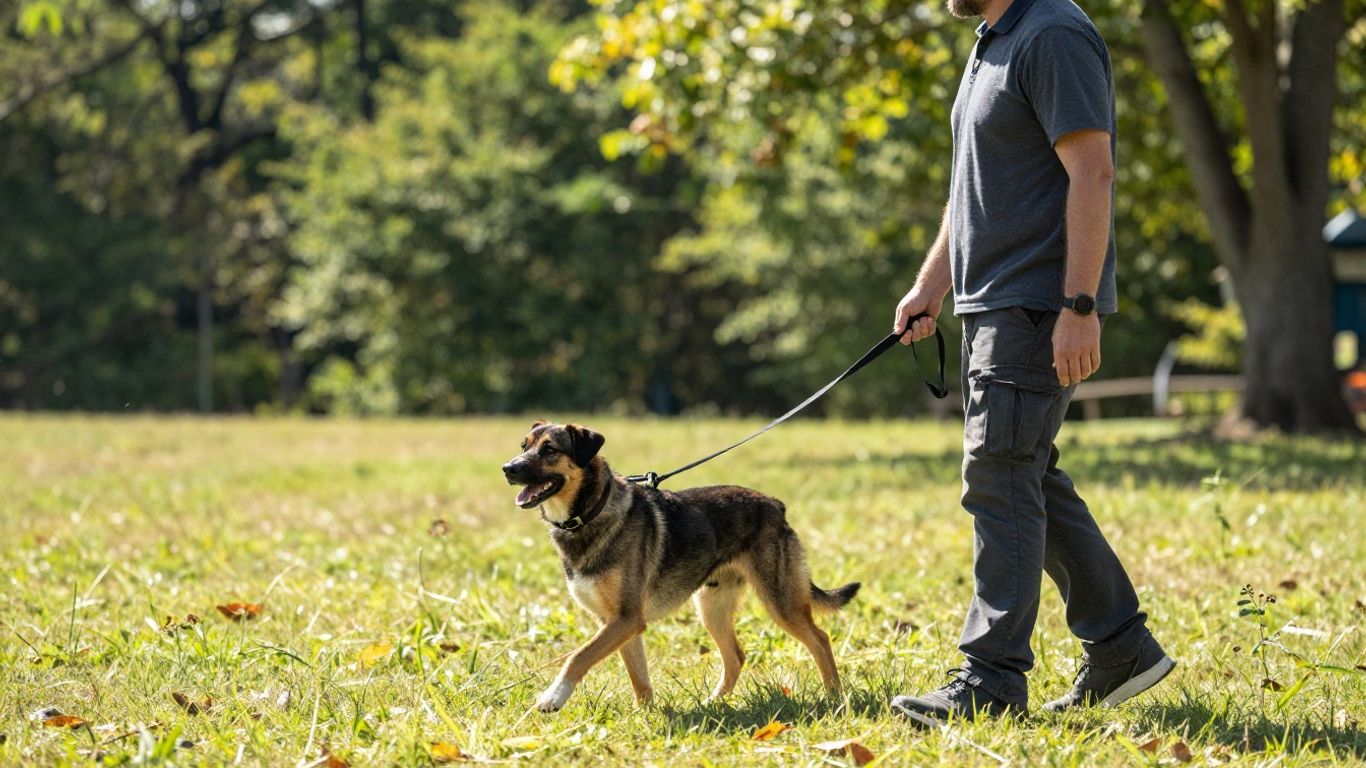
Okay, so you’ve got the basics down. Your dog understands that pulling stops the fun, and they’re starting to get the hang of walking nicely. But what happens when the real world hits? Squirrels, other dogs, that interesting smell on a lamppost – these are the things that can send even a well-trained dog back to pulling. We need to prepare them for these distractions.
Managing Distractions During Walks
This is where the rubber meets the road. Your dog needs to learn that walking with you is more rewarding than chasing every single thing that catches their eye. Start small. If your dog gets easily distracted by other dogs, begin your training sessions at a distance where they notice the other dog but aren’t reacting intensely. Reward them for looking at the other dog and then looking back at you. Gradually decrease the distance as your dog becomes more comfortable and less reactive. The goal is to build a strong association between seeing a distraction and checking in with you for a reward. This process takes patience and consistency.
It’s also helpful to vary your walking routes and times. If you always walk the same path at the same time, your dog will learn to anticipate certain sights and smells. Mixing it up keeps them on their toes and less likely to get stuck in a predictable pattern of pulling.
Reinforcing Desired Behavior Consistently
Consistency is the name of the game. Every single time your dog pulls, the walk should pause. The moment the leash slackens, you move forward. This might mean your walks are very stop-and-start initially, and that’s perfectly fine. It’s better to have a short, productive walk than a long, frustrating one. Use high-value treats – something your dog really loves – to reward them for walking nicely by your side. This positive reinforcement makes the desired behavior more appealing than pulling.
Think about it like this:
- Reward the good: Catch your dog doing something right, like walking with a loose leash, and mark it with praise or a treat immediately.
- Interrupt the bad: If pulling starts, stop moving. Don’t yank or scold, just stop. The walk ends until the leash is loose.
- Redirect when needed: If your dog is struggling, try changing direction. This can help regain their focus on you.
Remember, Anvil K9 Dog Training uses proven methods to build this reliability. Our 3 Week Program is designed to address these real-world challenges head-on, helping your dog develop solid leash manners even with distractions present.
Addressing Specific Pulling Challenges
Some dogs have specific reasons for pulling. High-energy dogs might pull simply because they have pent-up energy. In these cases, ensuring they get enough physical and mental exercise before the walk can make a huge difference. A tired dog is a well-behaved dog. For dogs that are fearful or anxious, pulling might be an attempt to get away from something that scares them. In such situations, forcing them forward can worsen the fear. Instead, focus on building their confidence and creating positive associations with the things they find unsettling. This is where understanding your dog’s individual motivations is key. If you’re finding that despite your best efforts, pulling persists, it might be time to look at more structured training. Programs like the 6 Week Puppy Program at Anvil K9 can establish strong foundations early on, preventing many of these issues from developing in the first place.
When to Seek Professional Guidance
Sometimes, despite your best efforts, leash pulling persists. It’s frustrating, I get it. You’ve tried different techniques, maybe even a new collar, but your dog still pulls like a train. It’s okay to admit when you need help.
Recognizing Persistent Leash Pulling Issues
If you’re consistently struggling, it’s time to look at why. Is your dog pulling out of excitement, fear, or something else? Understanding the root cause is key, but sometimes that’s hard to figure out on your own. Signs that you might need professional help include:
- Your dog pulls hard on every walk, no matter what you try.
- You feel anxious or stressed before even starting a walk.
- Your dog’s pulling is causing physical strain on you.
- You’ve tried multiple methods without seeing lasting improvement.
The Benefits of Board and Train Programs
Board and train programs offer a structured environment where your dog lives with a trainer. This allows for consistent, daily work on leash manners. At Anvil K9, we have two main programs designed for different needs. Our 6 Week Puppy Program is for puppies 12 weeks and older, focusing on building a solid foundation. For dogs 16 weeks and older, including adult dogs, our 3 Week Program addresses more ingrained behaviors like persistent pulling. These programs are intensive and provide your dog with clear communication and consistent correction, leading to reliable behavior.
Board and train means your dog lives with the trainer. This allows for constant, consistent training without the daily ups and downs you might experience at home. It’s about immersion and building new habits in a controlled setting.
Finding Expert Help in the Chattanooga Area
If you’re in the Chattanooga area and dealing with persistent leash pulling, Anvil K9 Dog Training is the answer. We specialize in balanced training methods that get real-world results. We offer programs like the 3 Week Program for adult dogs that need reliable obedience and calm behavior. We also offer financing through Affirm to make training accessible. Contact us to discuss your dog’s specific needs and see how we can help you achieve calm, enjoyable walks. You can learn more about our approach to loose leash walking.
If you’re unsure about the best way to help your dog, don’t hesitate to reach out. We’re here to guide you. Visit our website to learn more and schedule a chat.
Putting It All Together
Look, getting your dog to walk nicely on a leash isn’t magic. It takes time, patience, and the right approach. You’ve got the tools now, so start practicing. Remember, consistency is key. If you’re in the Chattanooga area and feeling overwhelmed, or just want to speed things up, Anvil K9 Dog Training can help. As a veteran-owned business, we use proven methods like NePoPo to get real results. We offer a 3 Week Program for adult dogs that can tackle pulling and other issues. You can even use Affirm financing to spread out the cost. Reach out to us at anvilk9.com/contact or check out our board and train options at anvilk9.com/board-and-train-chattanooga. We’re here to help you and your dog master the walk.
Frequently Asked Questions
Why does my dog pull on the leash all the time?
Dogs pull because they’re excited to explore. It’s a natural urge for them to want to sniff, see, and greet everything. Sometimes, they pull because they haven’t learned that walking nicely beside you is more rewarding. It can also happen if they’ve learned that pulling gets them where they want to go faster. Think of it like a dog in a hurry to discover the world.
What’s the best way to start teaching my dog not to pull?
Start by making sure your dog understands that pulling stops the fun. When your dog pulls ahead, simply stop walking. Wait until the leash goes slack, even for a second, then start walking again. Be super consistent with this. It teaches your dog that walking calmly beside you is what keeps the walk going. Reward them with treats and praise when they walk nicely.
Are certain collars or harnesses better for stopping pulling?
Yes, some gear can help. A front-clip harness, where the leash attaches to the chest, can redirect your dog back to you when they pull. A head halter can also work by gently guiding their head. However, gear is just a tool; it works best when combined with consistent training. It’s important to choose something that fits your dog well and doesn’t cause them pain.
How can I handle distractions when we’re training?
Distractions are tough. Start training in a quiet place with few distractions, like your backyard. As your dog gets better, slowly introduce more challenging environments, like a quiet street, then a busier park. Keep training sessions short and positive. When your dog does well despite a distraction, give them lots of praise and a special treat. If they get too overwhelmed, it means you’ve moved too fast, and you need to go back to an easier spot.
My dog still pulls even when I do everything right. What else can I do?
Sometimes, persistent pulling needs a bit more help. If you’ve been consistent and are still struggling, it might be time for expert advice. A professional trainer can look at your specific situation, understand why your dog is pulling, and give you a tailored plan. For example, Anvil K9 Dog Training in the Chattanooga area offers programs that focus on building reliable obedience and calm behavior, even in distracting environments. They use balanced training methods to ensure your dog truly understands what’s expected.
When should I consider a board and train program?
A board and train program is a great option if you’re finding it hard to make progress on your own, or if your dog has more complex issues like severe pulling, reactivity, or lack of focus. These programs allow your dog to live with experienced trainers who can dedicate consistent time and effort to their training. Anvil K9 Dog Training offers programs like their 3 Week Program for adult dogs, which is designed to build solid obedience and off-leash control. They also offer financing through Affirm, making it easier to invest in your dog’s good behavior.