
Key Takeaways
Selecting a training path for your canine companion requires careful consideration of training standards, program structure, and long-term results to ensure your dog succeeds. Keep these five points in mind as you make your decision:
- Board and train programs offer immersive environments that solidify training habits faster than hourly sessions.
- Balanced training, including the NePoPo methodology, provides dogs with clear, fair, and consistent communication.
- Always verify a trainer’s certifications and their experience level to ensure your dog receives professional guidance.
- Programs should be tailored to the specific developmental stage of your dog, whether they are a young puppy or an adult with established behaviors.
- Financing options like Affirm can help you bridge the gap between quality training and your budget, making professional support more accessible.
Understanding professional training models
Choosing the right model for your dog starts with understanding the difference between temporary support and holistic behavioral change. Many owners find that the structure provided by professional facilities helps solve behavioral issues that have persisted for years. Understanding the logic behind these models allows you to select a service that aligns with your household needs and your dog’s temperament.
The distinction between board and train and hourly lessons
Hourly lessons often rely on you to enforce consistency during the week, which can be challenging if your schedule is busy or the dog is particularly distracted. In contrast, a board and train format allows the dog to live at the home base, where they learn in a high-repetition, distraction-free environment. This immersive approach gives the dog zero opportunity to practice bad behaviors while learning the fundamental commands required for success. By the time the dog returns home, they have already developed the muscle memory necessary for reliable obedience.
Why immersion programs provide consistent results
Consistency is the bedrock of canine education, and immersion programs ensure that every interaction the dog has during their stay is guided by professional standards. When a dog lives with a trainer, the curriculum moves at the exact pace the dog requires to grow rather than waiting for weekly appointments. This rapid progress is essential for addressing deep-seated issues like leash reactivity or poor recall where a few hours of practice over a month would see limited results. The immersion model guarantees that training is not just performed in a classroom but is integrated into the daily life of the animal.
Evaluating your personal time commitment versus professional expertise
Most families want a well-behaved dog but lack the hours of daily, high-level repetition required to achieve true off-leash reliability. Anvil K9 addresses this common frustration by taking the heavy lifting of training off your plate. While you will always be involved in maintaining the training once the dog returns, letting a professional establish the initial foundation saves you a significant amount of stress. It is worth weighing what your time is realistically worth against the proven efficiency of a professional program that provides lifetime support.
Evaluating training philosophies: Balanced versus positive-only
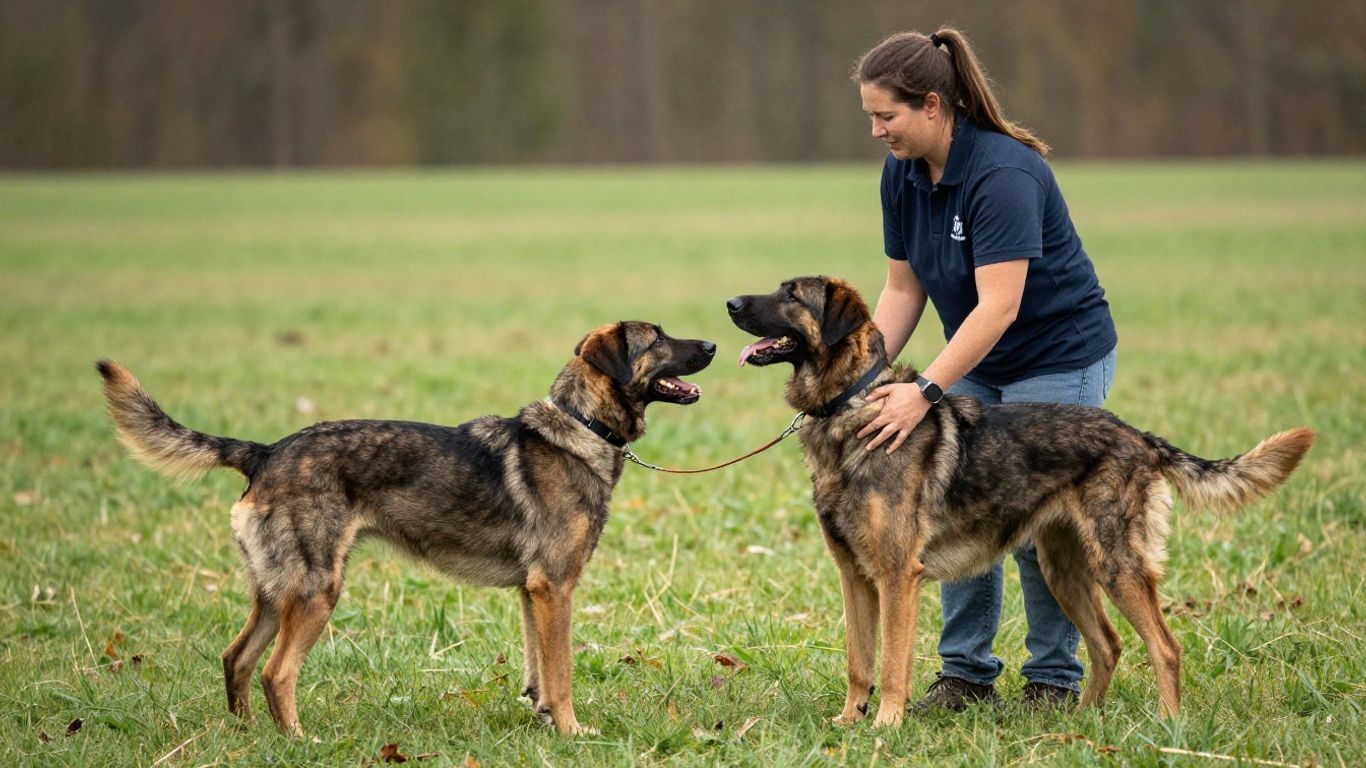
The methodology a trainer adopts dictates how your dog perceives their role within the family and the world around them. Balanced training acknowledges that dogs appreciate boundaries and clear input, not just external rewards. Moving beyond outdated, singular thinking allows for a more comprehensive approach to canine psychology that respects the natural intelligence of the animal.
The role of balanced training and NePoPo methodology
The NePoPo system, which stands for Negative, Positive, Positive, is a sophisticated balanced training method that treats communication as a three-part process. It uses subtle pressure only to clarify what the dog should not do, while heavily rewarding the desired behavior to ensure the dog feels motivated and eager to respond. This prevents the confusion that can occur with methods that ignore unwanted behavior entirely or, conversely, punish too harshly. The result is a dog that remains enthusiastic and confident because they know exactly how to earn their rewards.
Why clear communication builds dog confidence
Contrary to common myths, clear boundaries actually reduce a dog’s anxiety and boost their overall confidence. When a dog understands the consequences of their actions, they spend less time worrying about how to navigate complex social situations or new environments. By being firm and fair, Anvil K9 shows owners that communication is the highest form of kindness. A dog that is constantly guessing what is expected of them is a dog that struggle with insecurity, whereas a trained dog knows they are safe and successful.
Identifying trainers who prioritize real-world reliability
Reliability in a private backyard is very different from reliability in a busy downtown environment or on a hiking trail. You should look for trainers who test skills in various locations and under heavy distraction rather than just inside an arena. The goal is to produce a dog that listens to you even when the environment is trying to distract them, such as during a sudden encounter with other dogs or wildlife. Real-world reliability is the ultimate goal because it allows you and your dog to experience more of life together without being tethered to a leash.
Assessing professional qualifications and experience
Education and real-world results should always overshadow general personality or marketing claims when you investigate services. You are entrusting a professional with the safety and mental development of your dog, which warrants a deep look into their background. High-quality trainers are transparent about their experience and their methodologies, often inviting you to see their work in action.
Checking for veteran status and specialized credentials
Always ask about the certifications an owner holds and whether they have a background in professional animal welfare or service work. Veterans often bring a level of discipline and attention to detail that is directly applicable to training highly reliable, calm obedience. Credentials like NePoPo certification provide an objective standard that a trainer has undergone rigorous peer-evaluated testing to reach their level of success. Credentials act as a safeguard, ensuring you are working with someone who understands the nuances of animal behavior.
Why hands-on involvement from the lead trainer matters
Some large facilities assign your dog to a junior staff member who may lack the years of experience the lead trainer brings to the table. When you inquire about programs, confirm that the lead trainer is directly supervising or handling the training of your dog. Direct involvement means the person who has mastered the craft is the one correcting fine details, which drastically improves the outcome of your dog’s program. High quality care depends on this oversight to ensure no small aspect of the training is missed.
Analyzing the trainer’s honesty regarding potential outcomes
An honest trainer will tell you exactly what is possible and what is not, refusing to sell you a miracle cure for complex behavioral issues. If a trainer promises that your specific reactivity will vanish in two days, be wary of their lack of realism. Anvil K9 prioritizes clear, direct communication about the limitations of training and the hard work required on both ends of the leash post-training. This honesty builds the trust necessary to continue working together throughout the life of your dog.
Defining the right program for your dog
Selecting a program requires comparing the age and current maturity of your dog against the curriculum designed for them. Puppies have different physiological and mental needs than fully grown adult dogs, so standardizing training often misses the mark. Finding a program that divides its focus correctly helps ensure the training is neither too intense for a young puppy nor too simple for a distracted adult.
Foundation training for puppies starting at 12 weeks
Puppies are blank slates that require gentle but structured guidance to learn crate training, house manners, and basic impulse control. The 6 Week Puppy Program is specifically built for this sensitive stage, focusing on proper socialization and confidence-building. By starting early, you prevent problematic habits like biting, jumping, or excessive pulling from ever becoming ingrained. This investment in the first few months of a dog’s life pays off in decades of reliable, calm companionship.
Intensive obedience for adult dogs 16 weeks and older
Adult dogs have established personality traits and sometimes ingrained bad habits that require a firm, clear approach to correct. The 3 Week Board and Train program is designed for dogs 16 weeks or older to transition them into high-level obedience while addressing specific issues like pulling or lack of focus. This program is not just about learning commands but about changing the dog’s state of mind towards total calmness and better listening skills. It is an intensive but transformative experience for any adult dog owner seeking a reliable partner for daily life.
Addressing behavioral issues like reactivity and recall
Reactivity is a complex behavior usually stemming from a lack of clear leadership or misunderstood boundaries. Professional programs address these issues through controlled desensitization and the consistent application of markers and consequences that tell the dog how to behave. Recall, meanwhile, is the most important command for the safety of your dog and should never be left to chance or loose practice. By isolating these specific struggles, professional trainers can dismantle them and teach the dog to remain calm and attentive even during high-arousal situations.
The logistics of choosing a training program
Driving for a quality training program is often worth the extra time compared to choosing a local but ineffective option. You should prioritize the quality of instruction, the facilities available for the dog, and the long-term support you will receive once your dog returns home. Logistics include more than just mileage, as it involves the total value of the service delivered over the life of your pet.
Distance versus the quality of specialized instruction
While convenience is nice, excellence in training is a long-term investment that deserves high-quality expertise regardless of travel distance. Specialized instruction from a certified dog training cleveland tn expert or similar high-level home base ensures your dog receives the most efficient training available. Think of this as a gateway stage for your dog’s future; once the foundation is laid correctly, you will rely on those habits for the rest of their years. The time spent traveling is negligible compared to the time saved in frustration over a dog that never learned to behave.
Understanding the value of lifetime support post-training
Programs that exclude follow-up support leave owners struggling the moment they return home with a newly trained dog. Lifetime support is crucial because you will inevitably encounter unique scenarios that your dog has not yet rehearsed. Having direct access to your trainer for advice or troubleshooting ensures that your dog’s obedience remains sharp indefinitely. This consistency supports your role as the handler and ensures that the skills learned in the board and train environment translate perfectly to your home.
How to utilize financing options like Affirm for professional care
High-quality professional training should be accessible, and flexible payment plans offer a way to manage the investment without upfront financial strain. When you work with a home base that provides Affirm financing, you can ensure your dog gets the best care possible now while paying over time. This approach makes professional obedience solutions accessible to all dog owners, regardless of their current budget. Investing in your dog’s behavior today is one of the best decisions you can make for the peace and enjoyment of your household.
Conclusion
Finding the right educational path for your dog is a major decision that influences the quality of your life together for years to come. By selecting an intensive, balanced, and professionally managed program, you provide your dog with the foundation of communication and reliability they need to flourish in any environment. Trusting in a transparent, expert-led process today transforms your daily walks, home life, and adventures into experiences defined by confidence rather than chaos.
Frequently Asked Questions
Why does boarding my dog lead to faster learning outcomes?
Boarding your dog allows for immersion where they are surrounded by distraction-free training opportunities every single hour of the day. This constant repetition builds habits much faster than sporadic weekly sessions because the dog never has a chance to slip back into old habits.
How does balanced training differ from purely positive training?
Balanced training utilizes a full spectrum of communication including rewards and structured boundaries to create clarity. While purely positive training relies only on rewards, the balanced approach tells the dog not just what they should do, but also gives them feedback on what they should not do, leading to more reliable real-world obedience.
What can I expect from the training transition period?
Transitioning your dog back home involves learning the exact communication techniques the trainer used during the program so you can maintain consistency. You will receive instruction on how to handle your dog, reinforce commands, and maintain the standards set during the board and train phase.
How is reactivity addressed during a board and train program?
Reactivity is usually addressed by systematically exposing the dog to triggers at a distance where they can remain calm and then providing clear, consistent feedback while rewarding them for choosing focus instead of reaction. This process slowly desensitizes the dog and shifts their perspective on how to react in stimulating environments.
Can older dogs truly learn new, reliable obedience habits?
Dogs are highly capable of learning at any age, even if they have developed bad habits over several years. While older dogs may require more time for behavior modification compared to puppies, consistent professional instruction can significantly reshape their behavior and response to commands.
What should I look for in a trainer’s credentials?
You should look for documentation of certifications, professional affiliations with recognized training bodies, and a transparent history of experience. Credentials show that the trainer has achieved a verifiable standard of excellence and adheres to established protocols for the welfare of the dogs in their care.
How do I maintain training standards after the program?
Maintaining standards involves sticking to the daily routines and communication signals your trainer established during the program. Utilizing lifetime support options to troubleshoot new scenarios or refresh your skills ensures that you continue to function as a confident leader for your dog.
Ready to get started? Contact Anvil K9 Dog Training to talk through the right program for your dog.