
Key Takeaways
Starting your dog’s education early is the most effective way to ensure a lifetime of good house manners and obedience.
- Professional board and train programs provide the repetition necessary for young dogs to learn.
- Consistent routines throughout the training period build confidence and reduce anxiety in puppies.
- Balanced training methods like the NePoPo approach offer clear boundaries that dogs understand.
- Structured socialization during the critical development windows helps create a stable, well-adjusted adult dog.
- Investing in professional guidance early saves time and frustration during the challenging puppy months.
Understanding the puppy board and train model
Professional board and train models focus on high-repetition learning in a structured environment. When a puppy leaves home for an intensive program, they receive constant feedback, which effectively bypasses the inconsistency often found in owner-led, casual training sessions.
How immersion training accelerates puppy learning
Immersion training works because the puppy lives the obedience 24 hours a day rather than in disjointed 15-minute bursts. This constant flow of information allows the instructor to capitalize on every training opportunity, from crate time to meal prep. By removing the distractions of a busy living room, the dog focuses entirely on the instruction provided by Anvil K9 Dog Training.
Identifying the difference between board and train and hourly lessons
Hourly lessons are primarily designed to coach the owner rather than train the dog. While valuable, they rely on the owner successfully practicing every single skill between visits. Board and train shifts the heavy lifting to the professional, ensuring the foundation is built on consistent repetition before handing the dog back to the household.
Setting realistic expectations for your puppy’s stay
Training is not a magic switch, and board and train is a starting point for a lifelong journey. Owners should expect their dog to return with a clear set of communication markers and refined manners, but the long-term success still hinges on the owner maintaining the structure provided during the program.
Why consistency matters for young dogs
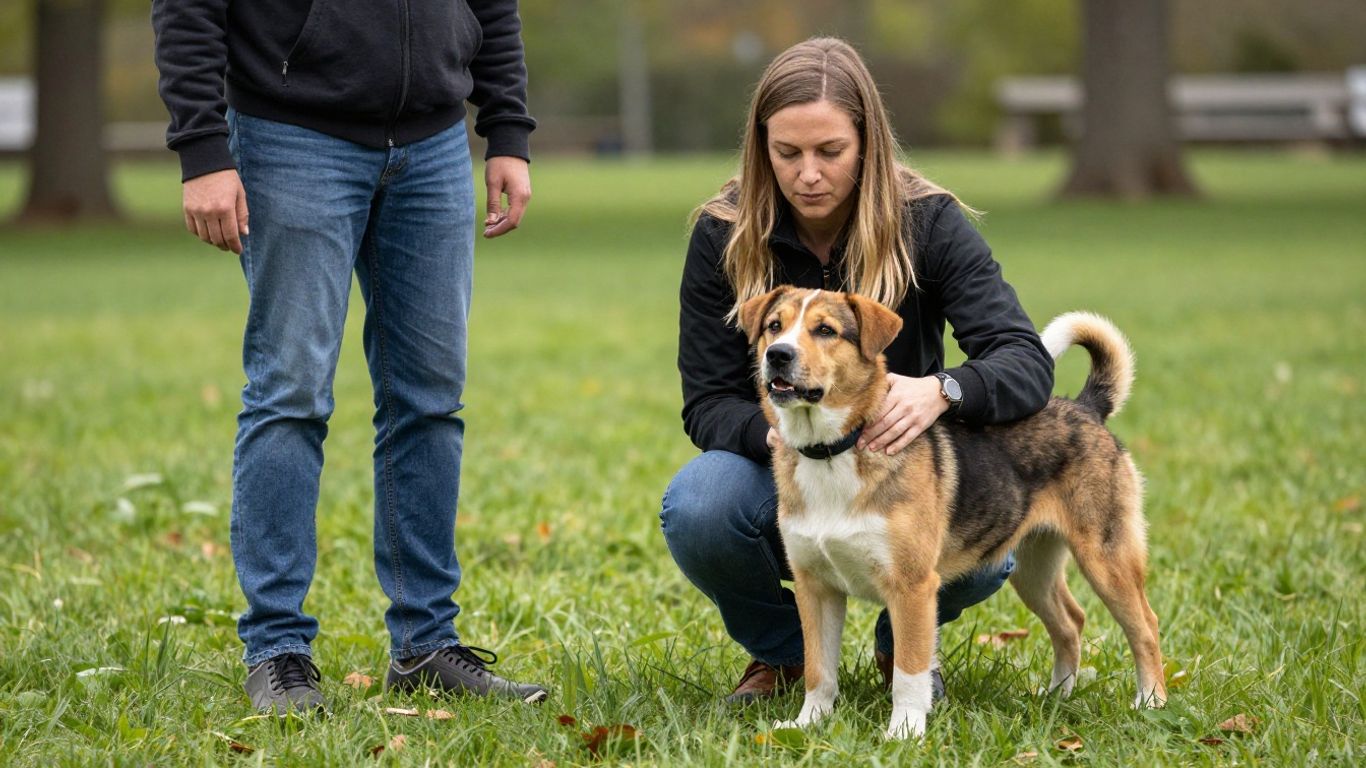
Young dogs thrive when their world feels predictable and fair. When rules change based on the owner’s mood or the room, it leads to confusion and unwanted behavioral habits. A consistent environment ensures the dog understands exactly how to earn rewards through compliance.
Establishing reliable foundational social skills
Young puppies need controlled exposure to various sights and surfaces without being overwhelmed. By curating these experiences in a controlled manner, trainers ensure the puppy learns to ignore distractions rather than react to them. This creates a calm dog that can enter professional dog training settings feeling secure in its surroundings.
The importance of professional marking and reinforcement
Professional trainers use markers to signal the exact moment a dog performs a task correctly. A precise marker, like a specific tone or word, bridges the gap between the behavior and the reward. This speed is vital for young puppies, whose attention spans are short and require immediate feedback to associate action with payoff.
Building confidence through predictable daily structure
Structure is the language you use to communicate safety to your dog. By following a set schedule for exercise, rest, and learning, the dog experiences less stress and shows fewer signs of reactivity. A predictable day allows the puppy to settle into a rhythm where obedience becomes a natural part of their daily life.
Evaluating training methods for long-term results
Choosing the right methodology determines how well your dog handles future challenges in the real world. A balanced approach provides the clarity that puppies need to navigate a human society filled with confusing social cues and distractions.
Introduction to the NePoPo balanced training approach
NePoPo provides a structured communication system that combines motivation and boundaries. It is a philosophy that values the dog’s mindset above simple trick performance. You can see how this balanced training system functions by observing the movement between pressure and release.
| Training Aspect | Role in NePoPo | Function |
|---|---|---|
| Negative Pressure | Communication | Defines boundaries |
| First Positive | Motivation | Encourages engagement |
| Second Positive | Consolidation | Rewards compliance |
This method gives the trainer and the owner a common language to handle both obedience and behavioral modification effectively.
Why clear communication beats positive only methods for reliability
Positive reinforcement is excellent for motivating dogs to try new things, but it often lacks consequences for ignoring a known command. Balanced training ensures that when an instruction is given, the dog understands it is not a suggestion. This extra layer of communication creates a reliable dog in high-distraction environments.
How structure reduces common unwanted puppy behaviors
Most unwanted behaviors, such as jumping, chewing, or incessant barking, come from a lack of direction or untapped energy. By establishing a clear set of house rules through professional training, you remove the guesswork for the puppy. When a dog understands their place and their job in the household, many destructive impulses simply fade away.
What to expect during the 6 week puppy program at Anvil K9
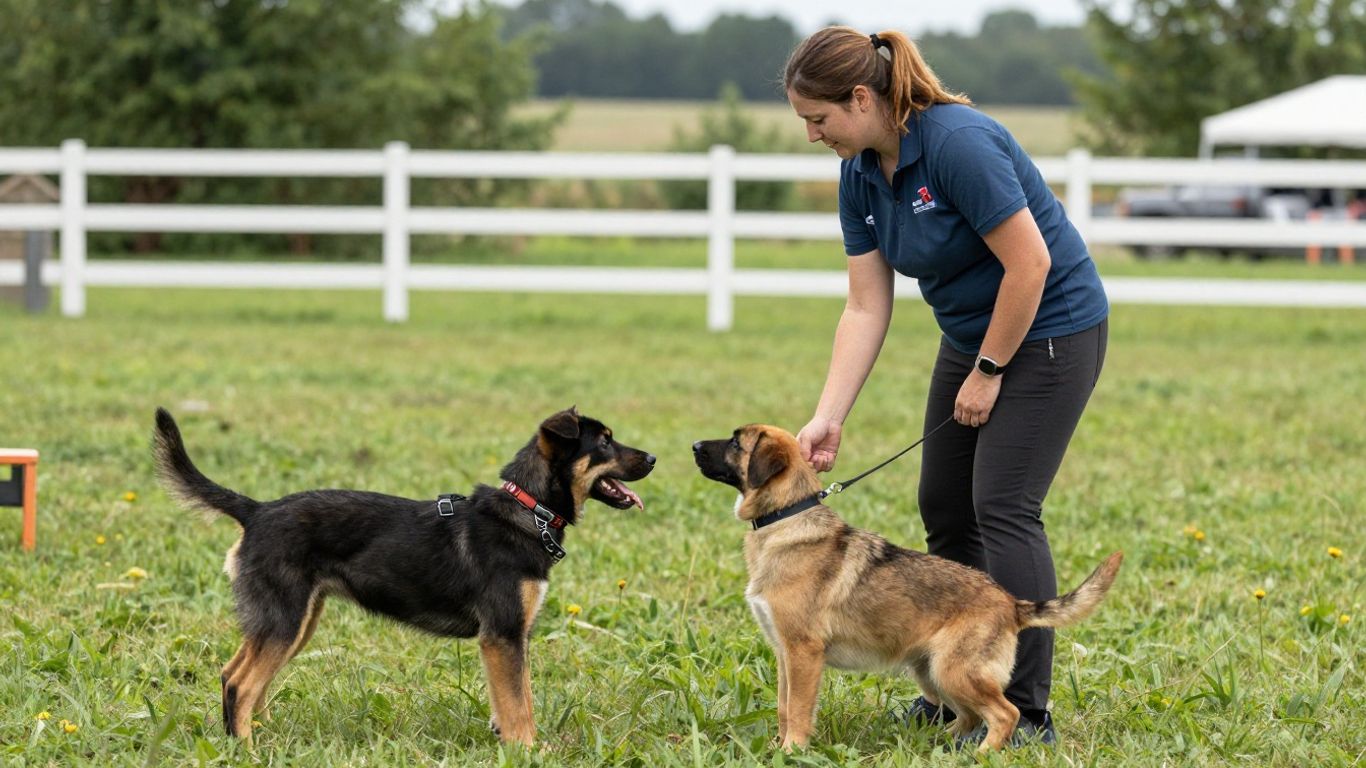
Programs must be intensive to be effective, which is why we dedicate six weeks to our foundational puppy work. This period allows us to safely move through developmental milestones and replace chaotic impulses with calm, obedient habits that stick.
Focus areas for puppies starting at 12 weeks old
Our program is designed to transform energetic puppies into polite companions through consistent habits. During the 6-week residency, we dedicate our time to several core objectives:
- Controlled socialization with other calm dogs
- House and crate boundary establishment
- Leash pressure sensitivity training
- Focused recall in varied environments
Transitioning from the board and train environment back to your home
We prioritize the handoff because it is the moment the owner becomes the trainer. We spend time ensuring you know how to use the specific markers and commands we utilized during your dog’s stay. This ensures that the transition is seamless for both you and your puppy.
The value of lifetime support for ongoing behavioral maintenance
Training is a lifelong commitment. Our support continues long after the program ends because we know that dogs hit new milestones and navigate changing environments as they age. Having access to your trainer for guidance helps you manage new challenges confidently.
Logistics of professional dog training in the Chattanooga area
Finding a board and train in Red Bank that understands the local terrain of Chattanooga is essential for real-world reliability. We focus on training dogs in the places you actually visit, so they are ready for the real world from day one.
Understanding our specific service area and home base
We serve the Chattanooga metro area, including Hixson and Signal Mountain, focusing on professional dog training in Hixson environments. We are proud to be a local, veteran-owned operation with a focus on delivering high-quality, hands-on instruction to our community.
How to invest in your puppy’s education through Affirm financing
We know that professional training is a significant life investment. To ensure our programs are accessible, we offer financing through Affirm. This allows clients to split costs into monthly payments, ensuring your dog gets top-tier training without stressing your budget.
Selecting a veteran owned business that prioritizes hands-on instruction
Accountability and personal experience drive our operation. Owner Jake Mumford is involved in the training of every dog that comes through our program. When you choose a veteran owned business, you are choosing a philosophy built on discipline, integrity, and direct communication.
Preparing your home for life after the program
Bringing your dog home should feel like the start of a more peaceful period in your life. Use the routines established during their residency as the baseline for all future house rules.
Maintaining the routines established during board and train
Success in the home depends on your ability to apply the consistent structure your trainer used. If the dog was trained to wait calmly at the door, continue asking for that wait every time you head outside. Consistency is the primary factor that keeps off-leash skills sharp and behavior polite.
Applying obedience commands in everyday real-world environments
Do not save your obedience work for the training field or the backyard. Practice your commands where you spend your time: at the local coffee shop, the hiking trail, or while running errands around town. Real-world repetition is what cements obedience into your dog’s character.
Working closely with your trainer to navigate new developmental milestones
As your puppy moves out of the juvenile stage and into adolescence, boundaries may get tested. Reaching out early to contact Anvil K9 allows us to provide targeted advice before minor behaviors snowball into larger issues.
Conclusion
Investing in professional puppy training creates a reliable, pleasant companion for many years to come. By choosing a balanced program that emphasizes consistency, structure, and ongoing support, you set your dog up to excel within your specific home environment.
Frequently Asked Questions
At what age is it ideal to start board and train?
Starting as early as 12 weeks for a puppy program allows you to set foundation manners before bad habits form. For adult dogs, training can begin at any age, provided they are physically healthy and mentally ready for intensive instruction.
Is board and train better than group classes?
Board and train provides the intense, repetitive structure that group classes cannot match. While classes offer social time, a residency program creates an immediate baseline of behavior that makes future socialization and public outings much easier.
How does the transition home affect the dog?
Most dogs handle the transition easily because high-quality programs prioritize clear handoff sessions. When the owner maintains the structure and commands used during the training, the dog quickly settles into a predictable routine at home.
What if my dog has high energy levels?
High-energy dogs often thrive under a board and train format because they receive professional engagement that meets their mental and physical needs throughout the day. Structured activity is the best way to manage a high-drive dog.
Does this method use harsh physical corrections?
Balanced training is centered on clear communication and the removal of confusion. It focuses on rewarding the right choice while setting boundaries for mistakes, ensuring the dog feels safe and confident throughout the learning process.
What happens if I move to a new environment?
Real-world training prepares dogs to generalize their skills to new locations. If you have been consistent with commands, your dog will be able to perform in almost any environment regardless of where you are located.
Can I afford professional dog training on a tight budget?
Many professional facilities now offer flexible financing options like Affirm. These options allow you to access professional expertise and divide the investment into manageable monthly payments, ensuring your dog gets the necessary training without a massive upfront cost.