
So, you’ve been working hard with your dog, practicing commands inside, and they seem to get it. Then you let them off leash in the park, and it’s like they’ve never heard of ‘sit’ or ‘stay’ before. It’s frustrating, right? You start to wonder, ‘why won’t my dog listen off leash?’ It’s a common problem, and usually, it comes down to a few key things that can be fixed with the right approach. Let’s break down what might be going on and how to get your dog back on track.
Key Takeaways
- Dogs often ignore off-leash commands because the outside world is way more interesting than anything you can offer inside. Squirrels, other dogs, and new smells are a big deal!
- A solid foundation of training is non-negotiable. If your dog doesn’t reliably follow commands on leash, expecting them to listen without one is a long shot.
- Building trust and clear communication with your dog is vital. This means consistent practice and making sure your dog understands what you want, every single time.
- Don’t fall for the idea that your dog should just ‘know’ what to do off-leash. Training requires deliberate effort, especially in distracting places.
- Sometimes, you need a balanced approach that clearly communicates expectations and rewards good behavior, especially when dealing with strong distractions. This is where Anvil K9 Dog Training’s NePoPo method can help achieve reliable off-leash control.
Understanding Why Your Dog Ignores Commands Off Leash
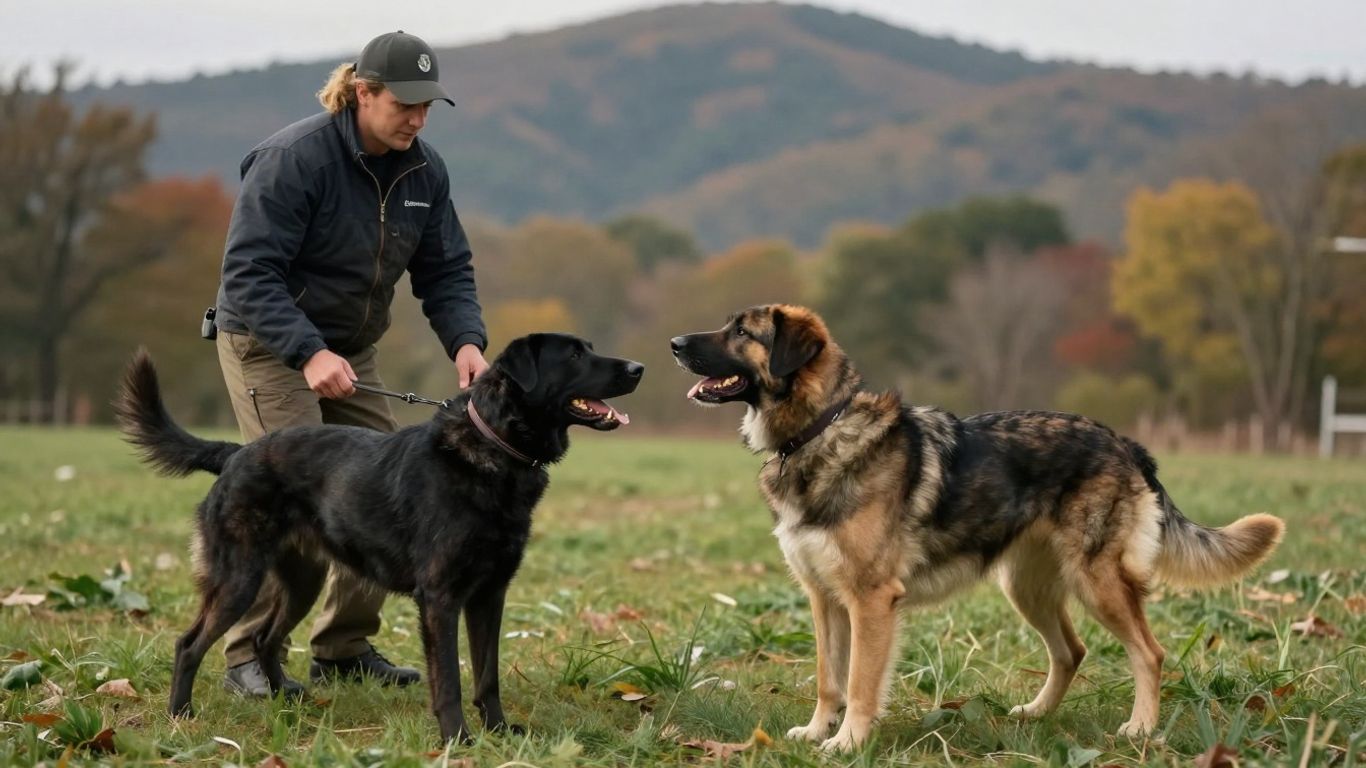
It’s frustrating when your dog seems to forget everything they know the moment the leash comes off. You call their name, give a command, and get nothing but a blank stare or, worse, a mad dash in the opposite direction. This isn’t usually a sign of defiance; it’s a communication breakdown. Let’s break down why this happens.
The Allure of Distractions
Your dog’s world is a sensory explosion. Smells, sounds, sights – they’re all competing for your dog’s attention. A squirrel darting up a tree, another dog across the park, an interesting scent on the breeze – these are incredibly powerful motivators. For your dog, the environment often presents far more exciting opportunities than obeying a command. Think about it: would you rather listen to a lecture or go to an amusement park? Your dog feels a similar pull. This is why teaching a solid "leave it" command is so important, helping them ignore tempting things they encounter [a60d].
Lack of Clear Communication
Sometimes, we think we’re being clear, but our dogs don’t quite get it. This can happen if commands haven’t been practiced consistently or if the cues we use are muddled. If "come" sometimes means "come here for a treat" and other times means "come here so I can put your leash on," your dog might hesitate. They learn to read the situation, not just the word. This is where structured training, like what we provide at Anvil K9, makes a difference. We focus on clear markers and consistent responses so your dog always knows exactly what you expect.
Insufficient Foundation Training
Off-leash reliability isn’t something dogs are born with; it’s built. If the basic obedience foundation wasn’t strong enough, asking for complex behaviors off-leash is like asking a student to solve calculus problems before they’ve learned basic algebra. We need to ensure the dog understands and reliably responds to commands on leash, in controlled settings, before we even think about removing it. This means repetition, clear expectations, and building a strong working relationship. For puppies, our 6 Week Puppy Program lays this groundwork from an early age, while our 3 Week Program is designed for adult dogs needing a solid obedience foundation.
Building a Reliable Off-Leash Relationship
Getting your dog to listen when they’re not tethered to you is a big step. It’s not just about commands; it’s about building a connection where your dog actually wants to pay attention to you, even with squirrels or other dogs around. This takes more than just repeating a command. It requires clear communication and a solid training foundation.
Establishing Clear Boundaries and Expectations
Dogs thrive on structure. When you’re off leash, your dog needs to understand what’s expected of them. This means defining what’s acceptable behavior and what isn’t. Are they allowed to run up to every person they see? Should they ignore other dogs? These aren’t things dogs inherently know; they need to be taught. Setting these rules upfront is key to preventing unwanted behaviors later. Think of it like teaching a child the rules of the house. It creates a predictable environment for your dog, which reduces anxiety and confusion.
The Importance of Consistent Practice
Reliability doesn’t happen overnight. It’s built through repetition and practice in different situations. You can’t just practice recall in your quiet backyard and expect it to work at a busy park. Consistency is the name of the game. Every time you ask for a behavior, you need to follow through. This means rewarding correct responses and addressing incorrect ones. It’s about making sure your dog understands that listening to you is always the best option. Building a strong recall takes time and effort, but it’s achievable with the right approach building a reliable recall.
Proofing Commands in Various Environments
This is where you test your dog’s training in the real world. Start small. Practice commands in your yard, then a quiet park, then a slightly busier area. Gradually increase the distractions. If your dog struggles, that’s a sign you need to go back a step and reinforce the behavior in a less distracting setting. It’s not about punishing your dog for failing; it’s about understanding their limits and helping them succeed. This process helps your dog generalize commands, meaning they learn that ‘sit’ means sit everywhere, not just in the living room. It’s about creating a dog that listens regardless of the circus happening around them. Sometimes, issues like resource guarding can also impact off-leash behavior, and addressing these requires building trust and consistent interactions resource guarding in dogs.
Addressing Common Off-Leash Training Pitfalls
It’s easy to assume that once your dog knows a command in the house, they’ll perform it anywhere. But the reality of off-leash work often hits hard. Many owners run into trouble because they fall for a few common misconceptions about how dogs learn and what makes them reliable.
The Myth of ‘Natural’ Obedience
Some people believe that certain breeds or individual dogs are just ‘naturally’ obedient or have a strong ‘drive’ that makes them listen. This isn’t really how it works. Obedience isn’t an innate trait; it’s a skill that needs to be taught, practiced, and reinforced. Expecting your dog to magically listen off leash without proper training is like expecting a child to read without ever teaching them the alphabet. Reliable off-leash behavior is built, not born. It requires clear communication and consistent effort from you. If you’re struggling, remember that Anvil K9 offers a 3 Week Board and Train program designed to build that solid foundation for adult dogs.
Over-Reliance on Positive Reinforcement Alone
Positive reinforcement is a powerful tool, and it’s definitely part of effective training. Rewarding good behavior is important. However, relying solely on treats and praise can sometimes fall short when distractions increase. Dogs need to understand not just what to do, but also what not to do, especially when their instincts or environmental stimuli are strong. A balanced approach, like the one used at Anvil K9, provides clear communication about both desired and undesired actions. This clarity helps dogs make better choices when faced with tempting squirrels or other dogs. It’s about giving them the full picture, not just half of it.
Ignoring the Dog’s Drive and Motivation
Every dog has drives – prey drive, play drive, social drive. These are powerful motivators. If your training doesn’t account for these drives, you’ll likely find your dog choosing their own fun over your commands. For example, a dog with a high prey drive might completely ignore a recall command when a rabbit darts across their path. Understanding what truly motivates your dog, whether it’s a specific toy, a particular type of praise, or even a carefully managed consequence for not listening, is key. We don’t just train dogs; we train your dog, considering their individual personality and drives. This is why our 6 Week Puppy Program focuses on building a strong foundation that accounts for a puppy’s developing drives and instincts.
Many owners get frustrated because their dog listens in the quiet living room but bolts after a squirrel in the park. This isn’t a sign of a ‘bad’ dog; it’s a sign that the training hasn’t been proven in a high-distraction environment. Your dog is simply responding to a much more compelling stimulus. The goal is to make your voice and your cues more rewarding than the distractions, and that takes structured work.
The Role of Balanced Training in Off-Leash Reliability
When your dog consistently ignores commands once the leash is off, it’s easy to get frustrated. You might feel like all your hard work has gone out the window. This is where balanced training, specifically the NePoPo method used at Anvil K9, really shines. It’s not about being harsh; it’s about clear communication and building a relationship where your dog understands expectations in all situations.
Clear Communication Through Markers and Consequences
Balanced training uses markers, like a clicker or a specific word, to tell your dog exactly when they’ve done something right. This is followed by a reward. But it also includes clear, fair consequences for incorrect behavior. This isn’t punishment; it’s information. Think of it like this: if your dog runs towards a busy street, a sharp "no" or a quick leash correction isn’t to scare them, but to interrupt the dangerous action and redirect them to safety. This clear cause-and-effect helps dogs learn boundaries faster and more reliably than relying on rewards alone. This method provides dogs with a complete picture of what is expected and what is not.
Building Confidence with Structure
Many people think balanced training is only for difficult dogs, but that’s not the case. The structure and clear communication inherent in methods like NePoPo actually build a dog’s confidence. When a dog knows exactly what you want and understands the rules of the game, they feel more secure. This is especially true when practicing commands in different environments. For instance, learning to heel off-leash in a quiet park is different from doing it near a busy road. The structured approach helps dogs generalize commands, making them reliable in real-world scenarios, not just in a controlled setting. This is why we focus on real-world results at Anvil K9. If you’re struggling with your dog’s behavior, our 3 Week Board and Train program is designed for adult dogs needing reliable obedience.
Achieving Reliable Recall Under Distraction
Recall is often the biggest challenge for off-leash dogs. A dog that bolts after a squirrel or another dog might seem disobedient, but often they’re just overwhelmed by the distraction. Balanced training addresses this by systematically introducing distractions while maintaining clear communication and motivation. We don’t just hope the dog will come back; we train them to understand that coming back to you is the most rewarding choice, even when exciting things are happening. This involves using markers and consequences to guide the dog’s choices. It’s about building a strong desire to check in with you. For puppies just starting out, our 6 Week Puppy Program lays the groundwork for this kind of reliability from a young age. We also offer flexible financing through Affirm to make investing in your dog’s future easier.
When to Seek Professional Guidance
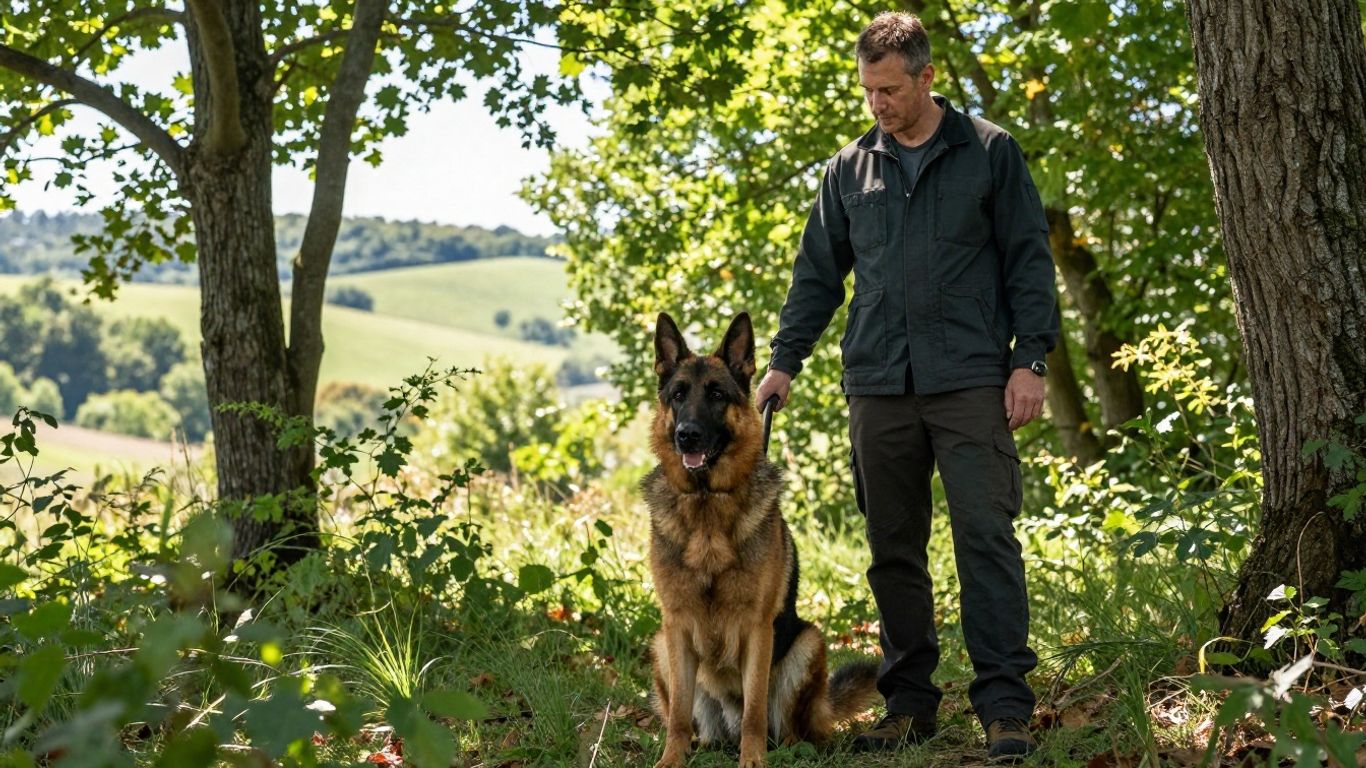
Sometimes, despite your best efforts, your dog’s off-leash behavior isn’t improving, or maybe you’ve hit a wall. That’s perfectly normal. Dog training isn’t always a straight line, and certain issues can be tough to sort out on your own. If you’re finding yourself frustrated or your dog isn’t making progress, it’s a good sign to bring in someone who does this for a living.
Identifying Training Plateaus
We all hit plateaus. You’ve been working on recall for weeks, and your dog is doing great in the living room, but the moment a squirrel runs by outside, it’s like you don’t even exist. This is a common training plateau. It means your dog understands the command in a controlled setting but hasn’t generalized it to the real world with distractions. It’s time to re-evaluate your approach when progress stalls.
Here are a few signs you might be stuck:
- Your dog consistently ignores commands in new or distracting environments.
- You’re seeing regression in behaviors that were previously reliable.
- You feel unsure about how to advance your dog’s training to the next level.
- Your dog’s behavior is causing safety concerns off-leash.
Addressing Deep-Seated Behavioral Issues
Some behaviors go beyond simple obedience. If your dog exhibits significant fear, anxiety, or aggression, especially when off-leash, it’s not something to tackle alone. These issues often have deeper roots and require a more specialized approach. Trying to manage these without proper knowledge can sometimes make things worse. For instance, a dog that bolts away due to fear needs a different strategy than one that ignores you because it’s overexcited. Understanding the root cause is key, and that’s where professional insight comes in. If your dog’s behavior is causing problems with other people or dogs, or if you’re worried about their safety, professional help is a must. This is where Anvil K9’s 3 Week Board and Train program can make a significant difference for adult dogs.
Professional trainers have seen a wide range of behaviors and know how to identify the underlying causes. They can create a tailored plan that addresses the specific issue, rather than applying a generic fix that might not work.
Accelerating Progress with Expert Support
Sometimes, you just need to speed things up. Maybe you have a new puppy and want to get them started on the right foot, or perhaps you have an upcoming event where you need your dog to be well-behaved. A professional trainer can assess your dog’s current skill level and your training goals, then create an efficient plan to get you there. They have the experience to know what works and what doesn’t, saving you time and frustration. For puppies, the 6 Week Puppy Program at Anvil K9 is designed to build a strong foundation from an early age. For adult dogs or older puppies struggling with off-leash reliability, the 3 Week Program is the answer. These structured programs are built for results, providing clear communication and consistent practice that leads to a well-behaved companion.
If you’re unsure about the best approach for your dog’s training needs, don’t hesitate to reach out. We’re here to help you figure out the perfect plan. Visit our website to learn more and schedule a chat!
Bringing It All Together
Look, getting your dog to listen when they’re off leash isn’t magic. It takes work, consistency, and the right approach. We’ve talked about common reasons why it’s not happening, from lack of clear communication to distractions being too much. Remember, training is a process, and every dog learns at their own pace. If you’ve tried the basics and are still struggling, especially with getting reliable off-leash control in real-world situations around Chattanooga, don’t get discouraged. Sometimes, a professional can make all the difference. Anvil K9 Dog Training, owned by veteran Jake Mumford, offers programs like the 3 Week Program for adult dogs or the 6 Week Puppy Program, using balanced training methods to build that solid obedience. They offer lifetime support and even Affirm financing to make it work. You can check out their board and train options at anvilk9.com/board-and-train-chattanooga or reach out through anvilk9.com/contact. It’s about building a relationship with your dog based on clear rules and mutual respect, and sometimes, a little expert help is exactly what you need to get there.
Frequently Asked Questions
Why does my dog suddenly stop listening when we’re outside without a leash?
It’s like your dog has a whole new world to explore! Outside, there are tons of exciting smells, sights, and sounds – squirrels to chase, other dogs to greet, or even just a fascinating leaf blowing in the wind. These distractions are super powerful and can pull your dog’s attention away from you. If your dog isn’t used to ignoring these fun things, they’ll likely choose the excitement over your command.
How can I make sure my dog understands what I want them to do off-leash?
Clear communication is key. Think of it like speaking a language your dog understands perfectly. This means using consistent signals, voice tones, and even body language. If you’re not super clear and consistent, your dog might get confused or just not realize you’re actually asking them to do something important. Practicing in a quiet place first helps them learn what your cues mean before adding in the chaos of the outdoors.
Is it normal for dogs to be disobedient off-leash, or is my dog just being stubborn?
It’s definitely not about your dog being stubborn! Most dogs aren’t born knowing how to ignore distractions and stay focused on their owner when off-leash. It takes a lot of training and practice to build that reliable behavior. Many dogs have a basic understanding of commands on leash, but the real test comes when they have the freedom to choose. Building that off-leash trust is a journey, not something that just happens.
What’s the best way to train my dog for reliable off-leash behavior?
Building a strong foundation is crucial. Start with basic obedience on a leash in quiet areas, then gradually introduce distractions. Use positive methods to reward good behavior, but also learn how to clearly communicate when a behavior is not acceptable. Think of it as teaching your dog rules and boundaries, and then practicing those rules everywhere. Consistent practice and making sure your dog understands the ‘why’ behind commands will help build that trust.
Can positive reinforcement alone make my dog listen off-leash?
Positive reinforcement is a fantastic tool for teaching good behavior and building a great relationship! However, for off-leash reliability, especially with strong distractions, it might not be enough on its own for every dog. Sometimes, dogs need clearer guidance on what *not* to do, along with rewards for doing the right thing. A balanced approach, like the NePoPo method used at Anvil K9, combines clear communication and motivation to ensure your dog truly understands and obeys, even when tempted.
When should I consider getting professional help for my dog’s off-leash issues?
If you’ve tried different training methods and feel like you’re hitting a wall, or if your dog’s lack of listening is causing safety concerns (like running into traffic or towards other dogs), it’s a good time to call in the pros. Experienced trainers, like Jake Mumford at Anvil K9 Dog Training in Chattanooga, can figure out the root cause of the problem and create a personalized plan. They have the expertise to help you achieve reliable off-leash control, even in challenging situations.